April 28, 2026 • Claire Merritt • 9 min reading time • Prices verified May 28, 2026
Foldable Reusable Grocery Bags That Actually Live in Your Trunk Without Becoming a Mess
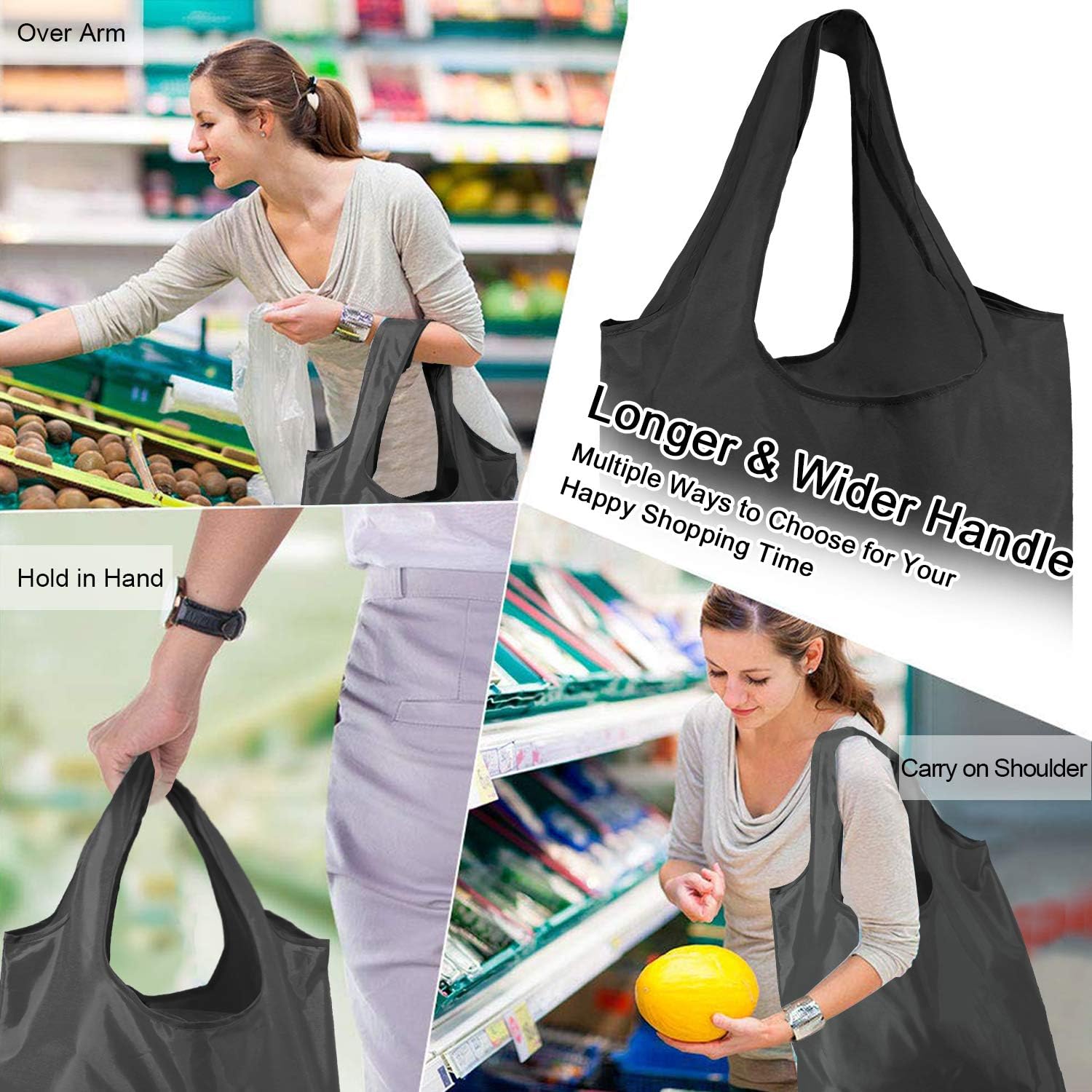
If you’ve ever reached into your trunk and pulled out a tangled wad of grocery bags that somehow managed to knot themselves together on the drive home, you already understand the core problem this article is here to solve. Foldable reusable grocery bags — bags designed to compress into a small pouch or flat rectangle when empty, then open into a full carrying bag when you need them — sound like a perfect trunk solution in theory. In practice, most of them end up in a chaotic pile within two weeks. The difference between bags that stay organized and bags that become clutter comes down to a few specific design choices: how they fold, what they’re made of, and how much weight they can actually hold before the seams start to complain. By the end of this guide, you’ll have a clear framework for choosing the right foldable bags for how you actually shop — and a decision rule for when to spend more versus when the budget option genuinely wins.
| EDITOR'S PICK[Sturdy Reusable Grocery Bags Fo…](https://www.amazon.com/dp/B00QJ93FY4?tag=greenflower20-20) | Mid-tier[BeeGreen 10 Pack Black Reusable…](https://www.amazon.com/dp/B088R6VV8G?tag=greenflower20-20) | Budget pick[BeeGreen Reusable-Grocery-Bags-…](https://www.amazon.com/dp/B09S8QVHP5?tag=greenflower20-20) | |
|---|---|---|---|
| Material | RipStop Nylon | — | — |
| Strap Type | — | Elastic Band | — |
| Pouch/Clip | Compact Pod with Carry Clip | Storage Pouch | Zipper Storage Pouch |
| Price | $44.95 | $20.39 | $19.99 |
| See on Amazon → | See on Amazon → | See on Amazon → |
Why Most Foldable Bags Fail the Trunk Test
The trunk environment is harder on bags than most shoppers realize. Vehicle interiors can reach extreme temperatures — well above 130°F on hot summer days and well below freezing in northern winters — stressing the coatings and welds that keep foldable bags intact. Add in the fact that most people don’t actually refold their bags between uses, and you have a recipe for a pile of limp fabric that’s impossible to grab quickly at checkout.
The three failure modes, in order of how often they show up in owner reviews:
-
The pouch disintegrates or inverts. Many foldable bags store by stuffing into a small attached pouch (sometimes called a “stuff sack” or “self-pouch”). The pouch seam is the weakest point in the entire bag. Bags where the pouch is sewn from the same material as the main body — rather than a separate, flimsier patch — consistently show longer usable lives in hands-on testing. Good Housekeeping’s reusable bag testing identifies seam and pouch construction as a primary durability differentiator between bags that last and bags that don’t. The Spruce’s reusable grocery bag coverage makes the same point, noting that pouch attachment quality is one of the first things to evaluate before buying.
-
The fabric gets tacky or stiff. Budget foldable bags are frequently made from rPET (recycled polyester, spun from post-consumer plastic bottles — you’ll see this labeled on the bag or in product descriptions) with a thin laminate coating. That coating degrades with heat and repeated compression. Owners consistently report that bags in this category feel fine for the first season and then develop a sticky or crackling surface by month eight to twelve.
-
The bag doesn’t open flat. This sounds minor until you’re at a farmers’ market trying to load a CSA box and your bag refuses to stay open because the fold memory in the fabric keeps collapsing the sides. Bags made from woven nylon or a higher-weight rPET (above roughly 70 grams per square meter — “GSM” is just the weight of the fabric per square meter, the same way thread count describes sheets) hold their shape better when loaded.
The Fabric Tradeoff Matrix
Here’s where the practitioner-level decision actually lives. You’re choosing between three material categories, and each one makes a different implicit promise:
Ripstop nylon (the fabric with the visible crosshatch grid of reinforcing threads): Extremely light, packs to almost nothing, and handles moisture well. The tradeoff is carry capacity — most ripstop foldable bags max out at around 20–25 lbs before strap attachment points show stress, and the slippery texture makes them harder to load with irregular produce shapes. Good Housekeeping’s hands-on testing consistently places nylon bags at the top of “lightest pack” categories while noting that families doing a full weekly shop often find them undersized for the task.
rPET woven tote fabric: The middle ground. Heavier than ripstop nylon, more structured, and typically available in a wider range of bag dimensions. The environmental narrative is legitimate — the Textile Exchange’s Preferred Fiber & Materials Market Report documents that rPET uses significantly less energy to produce than virgin polyester. The durability concern about laminate coatings applies here; look for bags with heat-sealed seams rather than sewn-and-glued construction.
Cotton canvas or recycled cotton blend: The heaviest option, packs the least efficiently, but holds its shape best when open and earns the strongest owner loyalty for long-term feel. Treehugger’s analysis of reusable bag lifecycle assessments — published under the title “Are Reusable Bags Actually Better for the Environment?” — raises an important environmental caveat: a conventional cotton bag needs to be used many dozens of times to offset its production footprint compared to single-use plastic. That’s not an argument against cotton — it’s an argument for buying one good one and keeping it for years, not replacing cheap ones annually.
| Material | Pack Size | Load Capacity (owner-reported avg) | Heat Resistance | Best For |
|---|---|---|---|---|
| Ripstop nylon | Fist-sized | 20–25 lbs | Good | Light runs, always-in-bag backup |
| rPET woven | Paperback book | 30–40 lbs | Moderate | Regular weekly shops |
| Cotton canvas | Trade paperback | 35–50 lbs | Excellent | Full hauls, structured loading |
The Fold Design Decision
Not all “foldable” bags fold the same way, and the fold method directly determines how well the bag behaves in a trunk. Three dominant designs:
Self-pouching (stuffs into attached pocket): Fast to deploy, fast to store, but only as durable as its pouch seam. Best when the pouch is reinforced with a bartack — a dense, tight cluster of stitches at stress points, the same technique used on the belt loops of quality denim — at both attachment corners. Without bartacking, the pouch tears away from the bag body within a year of regular use. Construction quality at attachment points is one of the most reliable visual signals of whether a foldable bag will hold up to daily use, and it’s the first thing worth inspecting at the store before you buy.
Flat-fold with snap or velcro closure: Folds into a flat rectangle, held closed by a snap or velcro strip. More reliable long-term because there’s no attached pouch to fail — you just fold and snap. The downside is that flat-folded bags require a flat surface or a deliberate moment to refold, which means many people don’t bother. These work best if you commit to a system: fold at the car, store in a designated spot (a trunk organizer bin or a door pocket), don’t just throw them in loose.
Roll-and-strap: The bag rolls from the bottom up and secures with a strap or buckle. Less common, but owners report the highest refolding compliance of the three designs because the roll is forgiving of imprecision. Any roll-and-strap bag is worth a second look if your household struggles to get bags back into storage shape.
The Trunk Organization System That Actually Works
The bag itself is only half the equation. The other half is the storage system you build around it.
The two-bin method is what organizers and frequent shoppers most consistently land on: one small bin or shallow crate in the trunk for folded bags (keeps them flat, makes grabbing easy), and a designated hook or clip on the back of a rear seat headrest for the bag you’re actively using and want to re-grab. This isn’t about aesthetics — it’s about friction reduction. The harder it is to grab a bag, the more likely you are to reach for a plastic one at checkout.
Apartment Therapy’s reusable bag coverage — published under the title “The Best Reusable Grocery Bags” — makes the same point from the other direction: the bags that get used consistently are the ones that are easiest to access, not necessarily the ones with the best environmental credentials or the prettiest prints. Accessible storage is the primary behavioral driver of consistent use, and consistent use is the only way a reusable bag actually delivers on its promise. The Spruce’s reusable grocery bag guide echoes this, emphasizing that storage convenience is a core factor in long-term bag adoption — not just an afterthought.
For trunk bins, a collapsible fabric storage cube (a separate product category, not a grocery tote) solves the problem neatly and costs $12–$25 at most home goods retailers. The bin itself folds flat when not in use, which handles the meta-irony of organizing your foldable bags with something that also needs to fold.
How many bags to keep in the trunk? A useful baseline: one bag per estimated grocery trip, plus two extras. If you shop once a week and typically fill four bags, keep six in the trunk. The buffer exists for the inevitable farmers’ market impulse buy or the friend who asks you to grab something on the way over.
The Decision Rule
If you’re standing at the purchase decision right now:
If you do one moderate grocery run per week and want bags that disappear until needed: Ripstop nylon, self-pouching design, at least 70D (denier — a measure of thread thickness and density; higher denier means heavier, more durable thread) fabric weight. Spend $10–$18 per bag. This is the “set it and forget it” tier, and it works.
If you’re doing a full family shop weekly — 40+ lbs of groceries, irregular load shapes, hot trunk summers: rPET woven or cotton canvas, flat-fold or roll-and-strap design, with visible bartacking at all strap attachment points. Budget $20–$35 per bag. The cost-per-use math strongly favors this tier over replacing cheap bags annually; at 52 uses per year, a $25 bag that lasts three years costs you $0.16 per use. A $9 bag that fails after 18 months costs $0.12 — but you’re buying it twice.
If aesthetics are non-negotiable and the bag is also doing work as a market or errand bag: Cotton canvas or a structured rPET with interior lining, in a color or print that fits your wardrobe. Brands like Baggu and Madewell occupy this space well. Spend $28–$45. These bags earn carry-weight loyalty from owners who report using the same bag for two to four years without visible degradation at seams.
The trunk test isn’t really about the bag — it’s about whether the bag earns its place in your daily system. The ones that do are almost always the ones where the fold design and the material weight were matched to the actual shopping load, not just the lowest price on the shelf.