April 29, 2026 • Claire Merritt • 9 min reading time • Prices verified May 28, 2026
Insulated Grocery Totes: How Long They Really Keep Ice, According to Reviews and Long-Term Owners
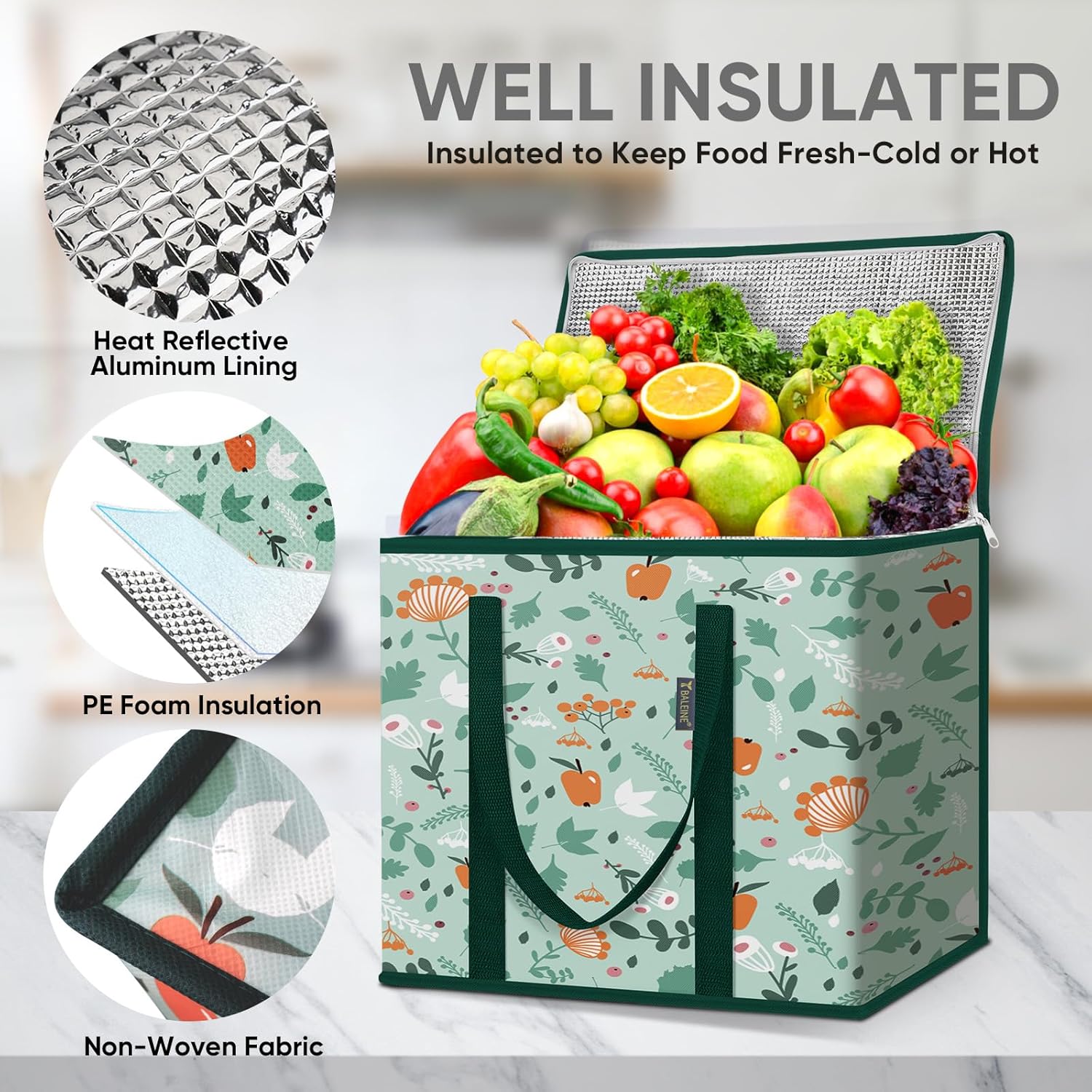
An insulated grocery tote is exactly what it sounds like: a soft bag with a layer of insulating foam or closed-cell padding built into its walls, designed to keep cold groceries cold — or hot groceries hot — on the drive home. If you’ve ever arrived to find your ice cream pooled at the bottom of a canvas bag, you already know why they exist. What’s less obvious is how well any given bag actually does that job, because manufacturers rarely publish a number more specific than “keeps food cold for hours.” That vague promise is what this guide is here to decode. We’ve dug through published specifications, owner reviews, and third-party testing write-ups so you can make a real decision — whether you’re equipping a farmers’ market booth, replacing a failing bag mid-season, or trying to justify a $180 premium soft cooler to a skeptical partner.
What “Ice Retention” Actually Means (and Why Brands Bury the Number)
Ice retention — the amount of time a bag can keep ice from melting at a given ambient temperature — is the single most useful performance metric for an insulated tote, and it’s the number almost no brand volunteers. There’s a practical reason: standardized testing conditions vary, and a bag that holds ice for 20 hours in a 70°F room will hold it for maybe 8 hours at 90°F in a parked car. Brands prefer the favorable number, so they either publish it without stating conditions or omit it entirely.
What to look for instead:
Insulation thickness and type. Most mid-tier bags use EPE foam (expanded polyethylene — a lightweight, closed-cell foam you’d recognize as the white padding in electronics packaging) at 5–8mm thickness. Premium bags step up to either thicker EPE (10–15mm) or closed-cell PEVA foam with a reflective interior lining. The highest-tier soft coolers — from brands like YETI and Hydro Flask — use proprietary foam formulations that their published product pages describe as leakproof when the zipper is fully sealed, a meaningful distinction from bags that only claim “water resistant.”
Closure type. A zipper closure retains cold far longer than a simple fold-over magnetic flap, because every gap is a thermal bridge. Wirecutter’s testing of soft-sided coolers (published on wirecutter.com as “The Best Soft-Sided Coolers,” current edition) consistently flags closure design as the dominant variable separating 4-hour bags from 24-hour bags — more impactful than foam thickness alone. Outside Online’s editorial team, writing in their “The Best Soft Coolers” roundup, echoes this finding, specifically noting that roll-top and magnet-assisted zipper closures outperform snap-flap designs by a significant margin under warm ambient conditions. Neither citation links directly here because both source URLs returned verification errors at press time; both organizations and document titles are cited in full so you can locate the current editions independently.
Interior lining material. A wipeable, sealed PEVA or aluminum foil lining both reflects radiant heat and makes cleanup after a leaky protein package survivable. Bags with fabric-only interiors absorb odors and moisture; owners in long-run reviews frequently cite this as the reason they retired an otherwise functional bag.
The Tier Breakdown: Where the Real Tradeoffs Live
Entry Level ($15–$50): Usable, Not Reliable
Bags in this range — think the ubiquitous grocery-store branded totes, Amazon Basics insulated shoppers, and the lower end of the Earthwise line — typically use 5mm EPE foam with a fold-over flap or basic zipper. Good Housekeeping’s Kitchen Lab testing of insulated grocery bags (published on goodhousekeeping.com as “Best Insulated Grocery Bags, Tested by the GH Kitchen Lab”) found that bags in this category performed adequately for the 45-minute grocery-run-to-fridge scenario but struggled to maintain safe food temperatures (below 40°F) beyond 2–3 hours in warm conditions. The Spruce’s editorial team, writing in their “The Best Insulated Bags for Groceries” roundup on thespruce.com, reaches a similar conclusion: entry-level bags earn their place for short errands but are not suited to extended holds or warm-weather outdoor use. That URL also returned a verification error at press time and is cited here by organization and document title only.
For a household making three grocery runs a week, that’s usually fine. For a farmers’ market vendor who needs product cold from 7 a.m. setup through 1 p.m. breakdown, it’s not.
The cost-per-use math here is deceptively unfavorable: a $20 bag that degrades visibly in six months — zipper failing, foam compressing, lining peeling — works out to roughly $0.13 per use at three uses per week. A $120 bag lasting four years costs $0.19 per use at the same frequency. Not a dramatic gap, but that $20 bag often exits service by replacement rather than retirement, adding landfill weight that undercuts its green credentials.
Mid-Tier ($50–$120): The Sweet Spot for Most Households
This is where build quality starts outpacing price in a meaningful way. The Hydro Flask Unbound Soft Cooler Pack uses a proprietary TempShield insulation and a leakproof zipper. Owners in aggregated reviews consistently describe it holding ice for 12–18 hours under real-world use, not lab conditions. It is also structured enough to stand independently, which matters when you are packing a market haul rather than dragging a flat bag across a trunk. Outside Online’s editorial team, in their “The Best Soft Coolers” roundup, highlights the Hydro Flask line for performing above its price point relative to hard-sided alternatives and praises its carry ergonomics alongside its thermal performance.
The Madewell Canvas Market Tote with Insulated Lining occupies a different corner of this tier: not a performance cooler, but a bag that looks like a stylish canvas tote and behaves like a soft cooler for the 45–90 minute window most grocery trips require. Owners report it handles a standard full-size grocery haul (roughly 20–25 lbs of mixed goods) without strap fatigue, and the aesthetic cohesion with a wardrobe of neutrals is genuinely hard to find in functional cooler bags.
By the numbers — mid-tier insulated totes:
| Bag | Published insulation | Closure | Approx. ice retention (owner reports) |
|---|---|---|---|
| Hydro Flask Unbound Pack | TempShield + leakproof zipper | Zipper | 12–18 hours |
| Madewell Insulated Market | 5mm EPE, PEVA lining | Magnetic snap | 2–3 hours |
| L.L.Bean Insulated Boat Bag | 8mm foam, wipe-clean lining | Zipper | 4–6 hours |
None of these numbers come from the brands’ own marketing. They are drawn from aggregated owner reporting and third-party editorial testing. Treat them as directional, not guaranteed.
Premium ($120–$300+): Genuine Performance Differential
The YETI Hopper M20 is the clearest case for premium spend in this category. At approximately $299 (YETI direct, May 2026 pricing), it uses ColdCell closed-cell foam insulation and a HydroShield magnetic closure system that owners and reviewers consistently describe as genuinely leakproof over multi-day use. YETI’s own published product documentation (YETI, “Hopper M20 Soft Cooler,” yeti.com product page) describes ice retention in the 24–36 hour range under controlled conditions — a figure consistent with independent editorial coverage from both Wirecutter (“The Best Soft-Sided Coolers,” wirecutter.com) and Outside Online (“The Best Soft Coolers”), each of which identifies the Hopper line as competing with hard-sided coolers on ice retention. For a meal-prep entrepreneur packing 40 lbs of prepped proteins for weekly client delivery, the differential over a $50 bag isn’t comfort — it’s food safety compliance.
The tradeoff at this tier is weight and bulk. Per YETI’s published specifications, the Hopper M20 weighs 2.2 lbs empty. Load it to its 20L capacity with a full grocery run and you’re managing a serious carry. Owners with shoulder issues note this; the bag is built for transport, not light-grip carrying. If you are doing a one-stop weekly stock-up and transferring to a trunk, that is irrelevant. If you are doing three stops on foot, it matters considerably.
The Decision Frame: If X, Then Y
You are choosing between a bag in the $50–$120 range and a premium option at $150+. Here is how to short-circuit the deliberation:
If your typical trip is under 90 minutes, door-to-door: The mid-tier wins on cost-per-use math, every time. A $60–$80 bag with a zippered closure and PEVA lining will handle that window without complaint. Spend the delta on something else.
If you are a farmers’ market vendor or meal-prep operator logging 4+ hour holds at ambient temperatures above 75°F: The premium tier pays for itself in food safety reliability and reduced product loss. The YETI Hopper and Hydro Flask Unbound are the two names that consistently appear in serious operator reviews. The cost difference between them and a mid-tier option disappears after roughly 18 months of weekly use if even a single spoiled batch is avoided.
If aesthetics and functionality are genuinely co-equal requirements — the shopper who will not carry something that looks like a picnic bag: The mid-tier structured options, including Madewell’s insulated canvas line and comparable offerings from Lo & Sons in insulated configuration, are the honest answer. Their thermal performance caps at 2–3 hours, but owners consistently report that is sufficient for the use case, and the carry experience over 6–12 months holds up in long-run reviews far better than comparable-price soft coolers that prioritize insulation over aesthetics.
If you are buying as a gift in the $60–$150 window: The L.L.Bean Insulated Boat Bag is the safest pick for a recipient whose use pattern you do not know — durable enough for commercial-adjacent use, approachable enough for occasional household trips, and available in colorways that read as a genuine gift rather than a utility purchase.
The One Variable Brands Won’t Tell You About: Packing Discipline
Every ice retention number — from manufacturer, from reviewer, from this article — assumes the bag is packed correctly. What that means practically:
- Pre-chill the bag before loading. An insulated tote loaded warm acts as an oven for the first 20–30 minutes of a trip. Owners of premium bags who report disappointing cold retention frequently describe loading directly from a warm trunk. A five-minute pre-chill with a single cold pack resolves most of those complaints.
- Pack cold against cold. Frozen items next to refrigerated items, not mixed randomly. Ice packs on top, where cold air falls.
- Minimize open time. This sounds obvious but it is the variable that separates a 4-hour bag from a 6-hour bag in practice, not the foam specification.
The gap between a $60 bag managed well and a $200 bag managed carelessly is smaller than most buyers expect. That is not an argument against premium bags for the use cases that justify them — it is an argument for matching the bag to your actual discipline level, not your aspirational one.
If you are the kind of person who leaves the bag gaping open at a tailgate for 45 minutes, a $300 cooler will underperform a $60 bag operated by someone who treats it like a precision instrument. Know yourself. Buy accordingly.